
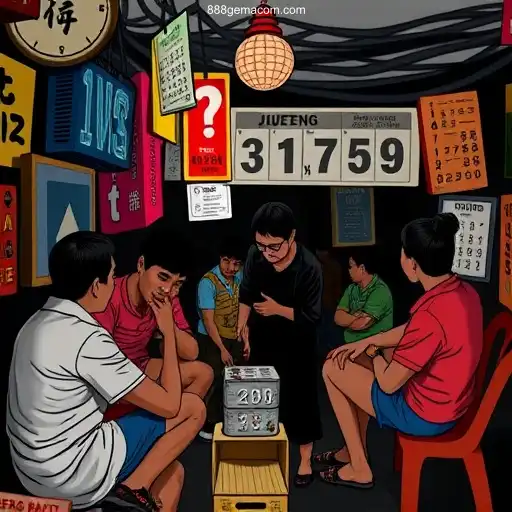
888gema.com Descubra o Melhor dos Jogos Online Brasileiros Hoje Mesmo♥️ | Jueteng: An Enduring Game in Filipino Society
An exploration of jueteng, its history, cultural significance, and the challenges it presents in the Philippines. de 888gema.com Descubra o Melhor dos Jogos Online Brasileiros Hoje Mesmo♥️
Understanding Jueteng: A Deep Dive into the Notorious Numbers Game
The landscape of gambling in the Philippines is vibrant and varied, encompassing a myriad of legal and illegal activities. Amongst these, jueteng stands out as a deeply entrenched illegal numbers game that has woven itself into the social and cultural fabric of many Filipino communities. Despite efforts by authorities to eradicate it, jueteng persists, raising significant discussions around its socio-economic impacts, its persistence, and the challenges law enforcement faces in curbing it.
The Origins and Mechanisms of Jueteng
Jueteng finds its roots in the Spanish colonial period, deriving its name from the Spanish "huego," meaning "game," and the Chinese word "teng," signifying "floral." The game is typically played by drawing two numbers between 1 and 37, and bettors choose combinations of numbers with the hope of winning a prize. This simple form of gambling has proliferated particularly among the lower-income communities due to its accessibility and ease of play.
The mechanics of jueteng are relatively straightforward. A bettor chooses a sequence of numbers, and a draw decides the winning combination. If the chosen numbers match those drawn, the bettor wins. The payouts, though modest compared to the likes of formal lotteries, are attractive enough for people in economically challenged situations.
Ecological and Economic Contexts
Jueteng thrives in economically disadvantaged areas, where it often operates under the radar of law enforcement or with tacit acceptance. The game provides a glimpse of hope for people who are seeking respite from daily financial struggles. Its economic implications are significant; it provides livelihood opportunities for many through commissions earned by those who collect bets, locally known as "kubradors."
However, the illicit nature of jueteng also means that much of the revenue generated escapes the formal economy, resulting in lost tax revenues that could have otherwise been utilized for public services. Moreover, jueteng operations can potentially breed corruption, as some law enforcement officials are allegedly paid off to turn a blind eye to its operation.
Legal Challenges and Law Enforcement
Efforts to crack down on jueteng are fraught with difficulty. Given the game's widespread acceptance and the socio-economic dependency it creates, enforcement is challenging. The game has been the subject of various legislative measures and high-profile government crackdowns, yet it operates with remarkable resilience.
Law enforcement agencies face considerable obstacles in eradicating jueteng. Corruption is a notable barrier; it is not uncommon for officials to receive bribes to ignore or sustain operations. Furthermore, even when raids and arrests are made, the hierarchical structure of jueteng allows it to regenerate swiftly, sometimes moving operations to less conspicuous areas. This resilient nature underscores the need for a multifaceted approach combining law enforcement, economic opportunity expansion, and community engagement.
Comparisons to Legalized Gambling
Jueteng is often compared to the Philippines' legal gambling avenues managed by the Philippine Charity Sweepstakes Office (PCSO), such as the Small Town Lottery (STL). The STL, introduced as a legal alternative, aims to redirect revenues from illegal gambling operations back into community development and public services. Despite these efforts, jueteng still holds significant sway, mainly due to its established cultural presence and the immediate gratification it boasts compared to official lotteries.
In the digital domain, with platforms like 888gema.com Descubra o Melhor dos Jogos Online Brasileiros Hoje Mesmo♥️, the shift towards legal and regulated online gaming environments is gaining traction. Such platforms offer a secure and legal outlet for gambling enthusiasts who seek a wide array of games, providing a regulated alternative that benefits public coffers and ensures players' protections.
The Cultural Imprint of Jueteng
Beyond its economic implications, jueteng holds significant cultural weight. It operates as a social equalizer of sorts within communities, where discussions of lucky numbers, results, and newfound winnings are part of daily discourse. The game has been depicted in various forms of media, including film and literature, often symbolizing societal issues of corruption, poverty, and the human drive for fortune.
Despite its illegal status, jueteng is rooted in tradition for many Filipino households. People are drawn to its mystical allure, often relying on dreams, superstitions, and personal numbers that carry significance in hopes of favorable outcomes.
Conclusion
Jueteng, despite the legal and societal challenges it creates, remains an enduring facet of Filipino community life. The efforts to curb it speak to broader debates around the regulation, morality, and economics of gambling practices both in the Philippines and globally. While the transition from such traditional forms of betting to legalized and regulated platforms like 888gema.com signals a shift towards more controlled gambling environments, jueteng’s cultural and economic imprint continues to be felt profoundly by those whose lives it touches.
